Our work
Heating, hot water and the rooms it ends up in.
These are photographs from JET Heating Ltd's own Google Business Profile — real jobs, not stock imagery. The captions describe what is in the picture and nothing more. Send over anything newer and it can go straight in here.
- Hot water & pipework
- Oil
- Showers
- Bathrooms
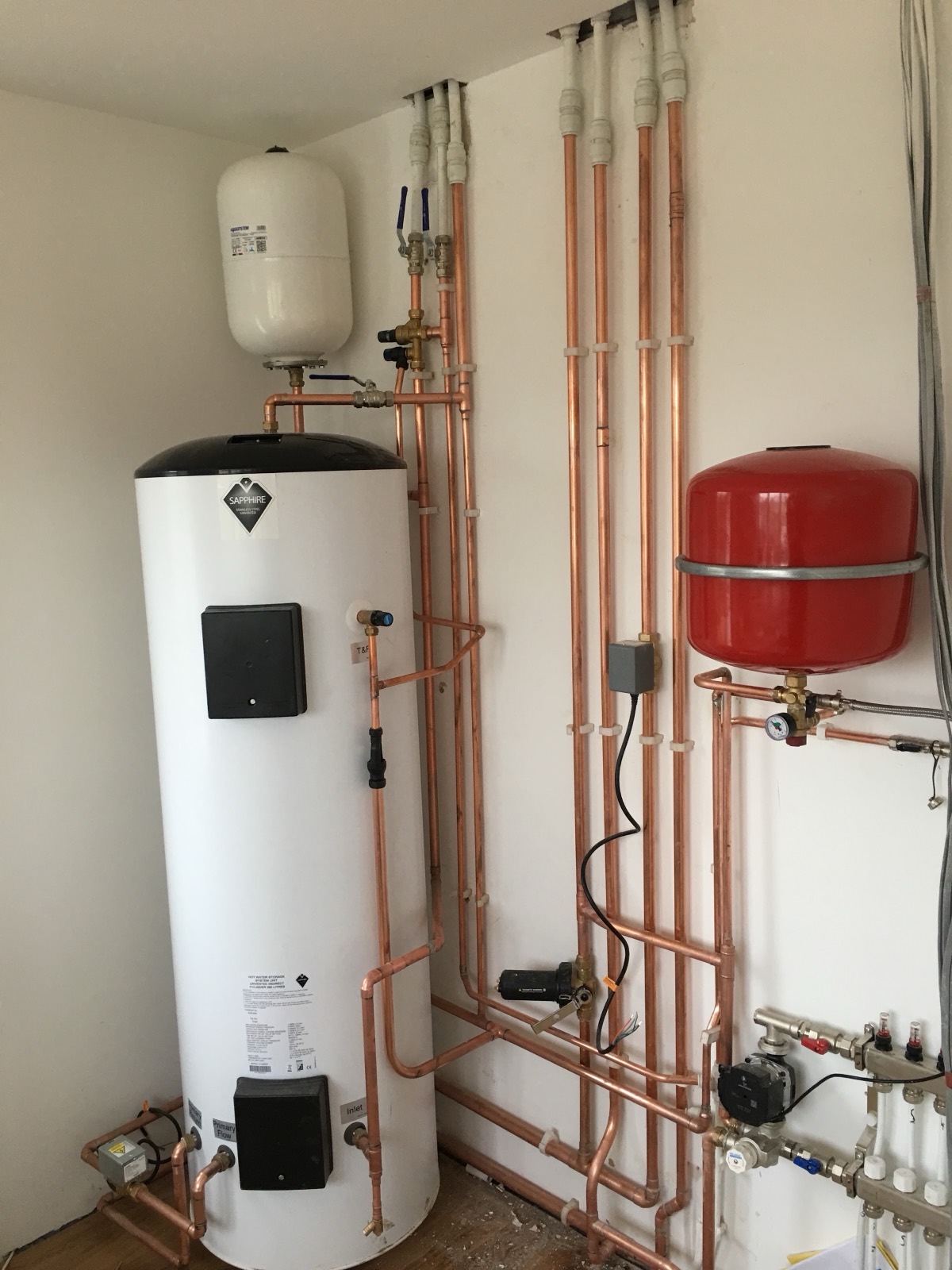
An unvented hot water cylinder with the primary and secondary pipework run in copper, expansion vessels on both the heating and hot water sides, pump and zone valves grouped where they can actually be serviced.
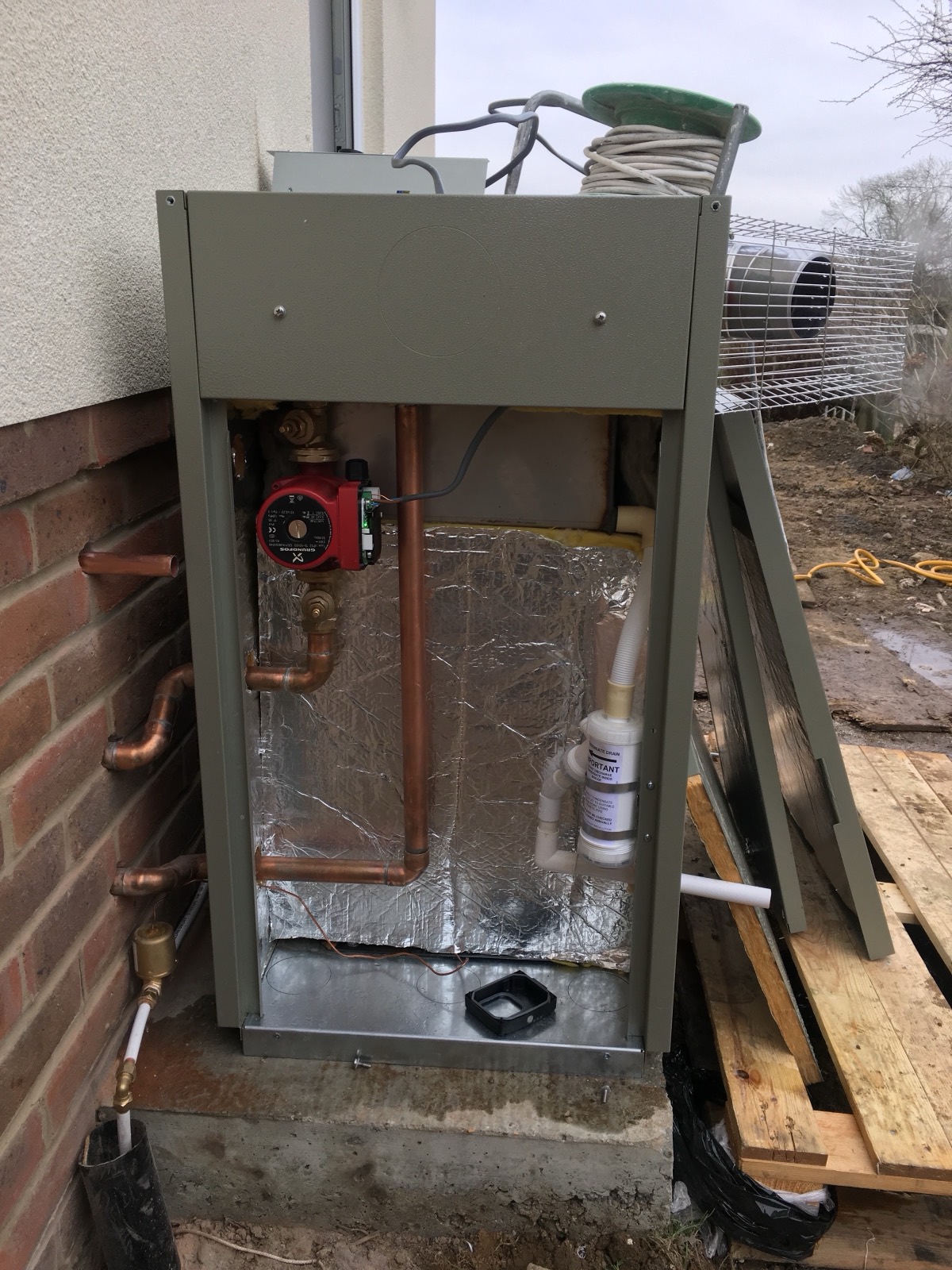
An external plant housing built onto the gable of an oil-fired property — circulator, insulated flow and return, isolation valves and drain, boxed and insulated against a Kent winter.
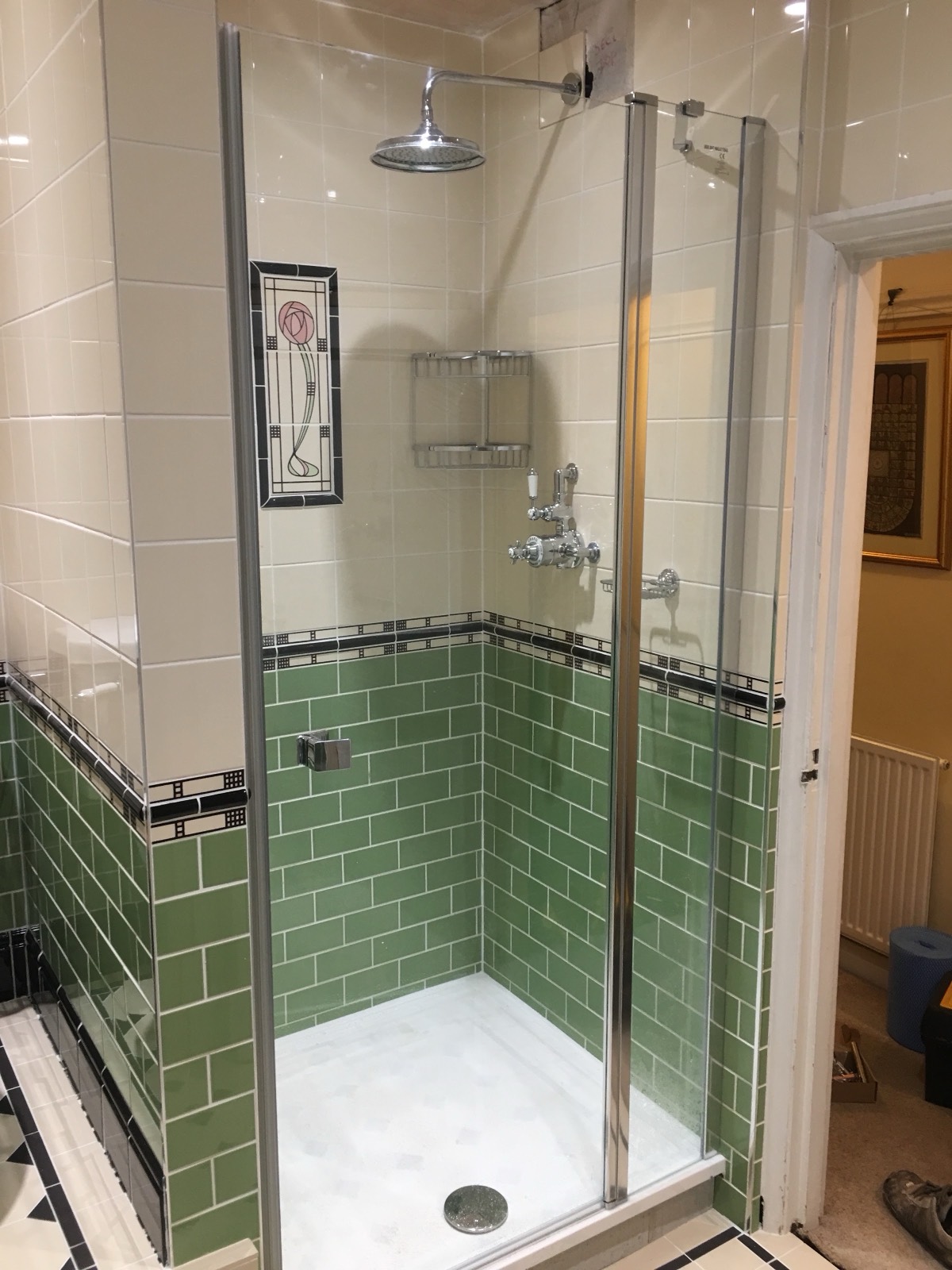
A shower enclosure with an exposed thermostatic valve and rainfall head, set in period green metro tiling with a feature border — the sort of install that has to suit the pressure the house can deliver.
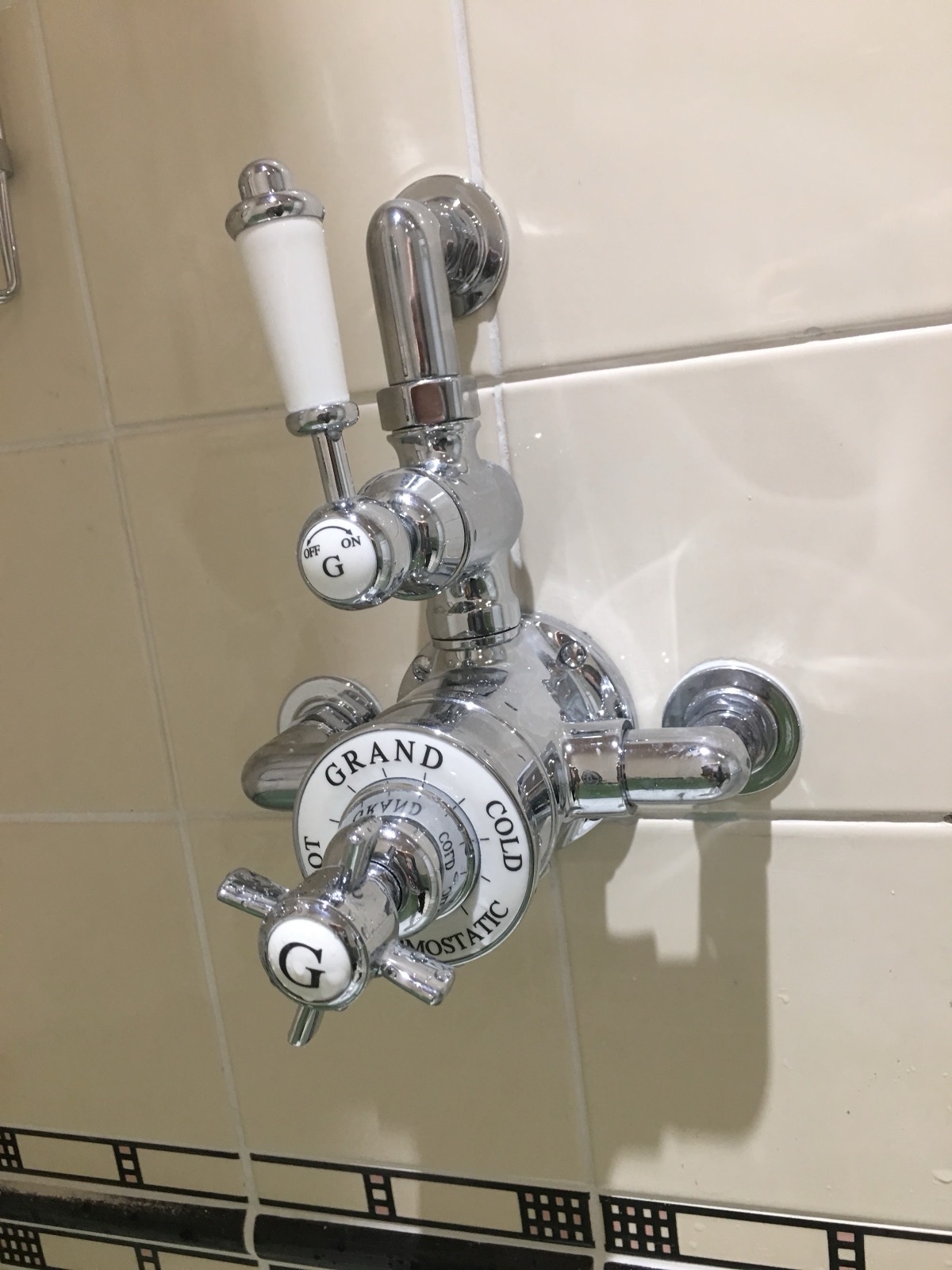
A traditional exposed thermostatic shower valve, fitted level and plumb with the pipe centres landing where the tiling wants them.
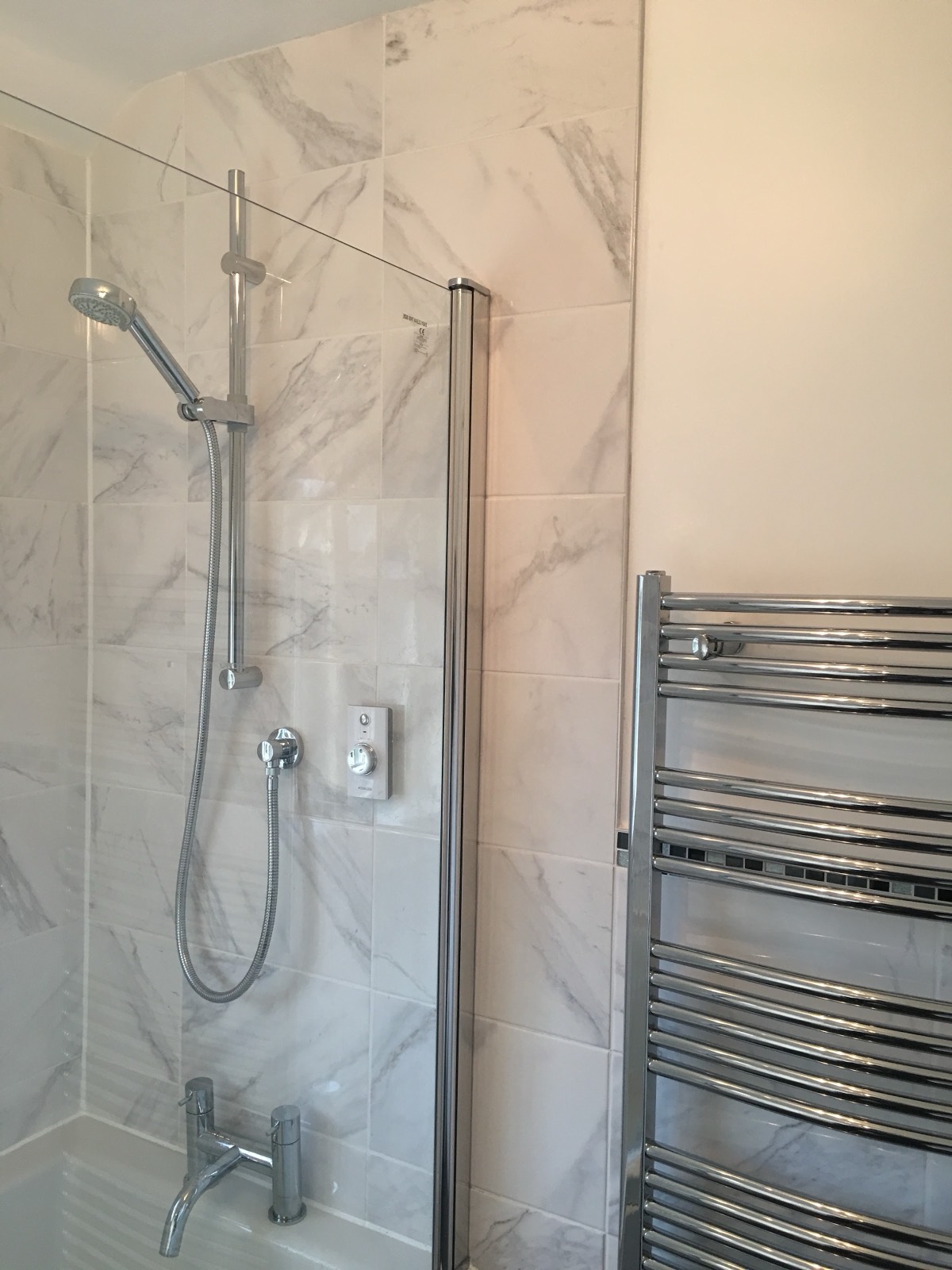
A bath shower on marble-effect tiling with a chrome towel radiator alongside — the radiator run in as part of the same job rather than left for someone else.
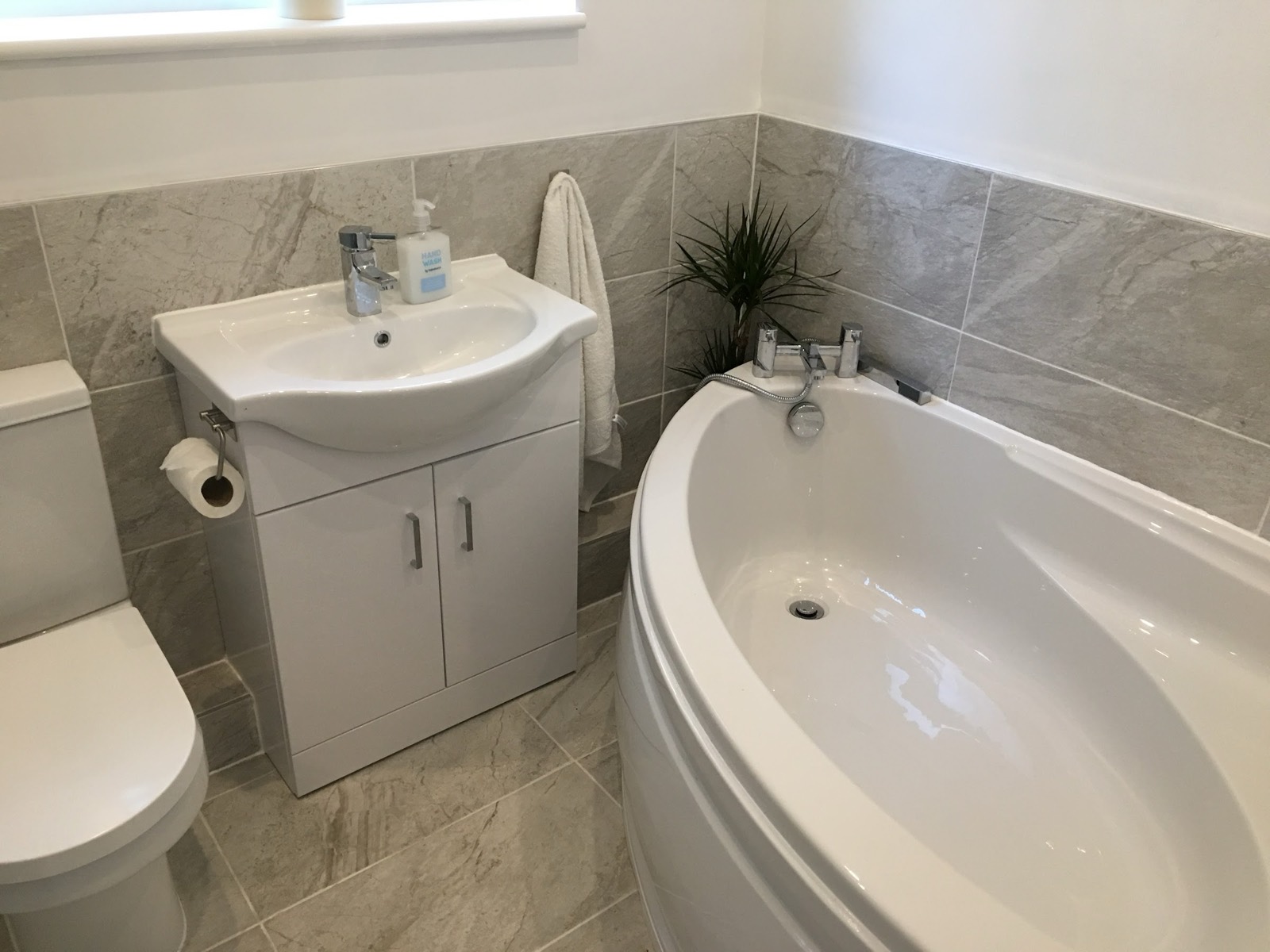
A finished family bathroom: offset corner bath, vanity basin unit and close-coupled WC, with the tiling and the waste runs planned around a room that is not square.
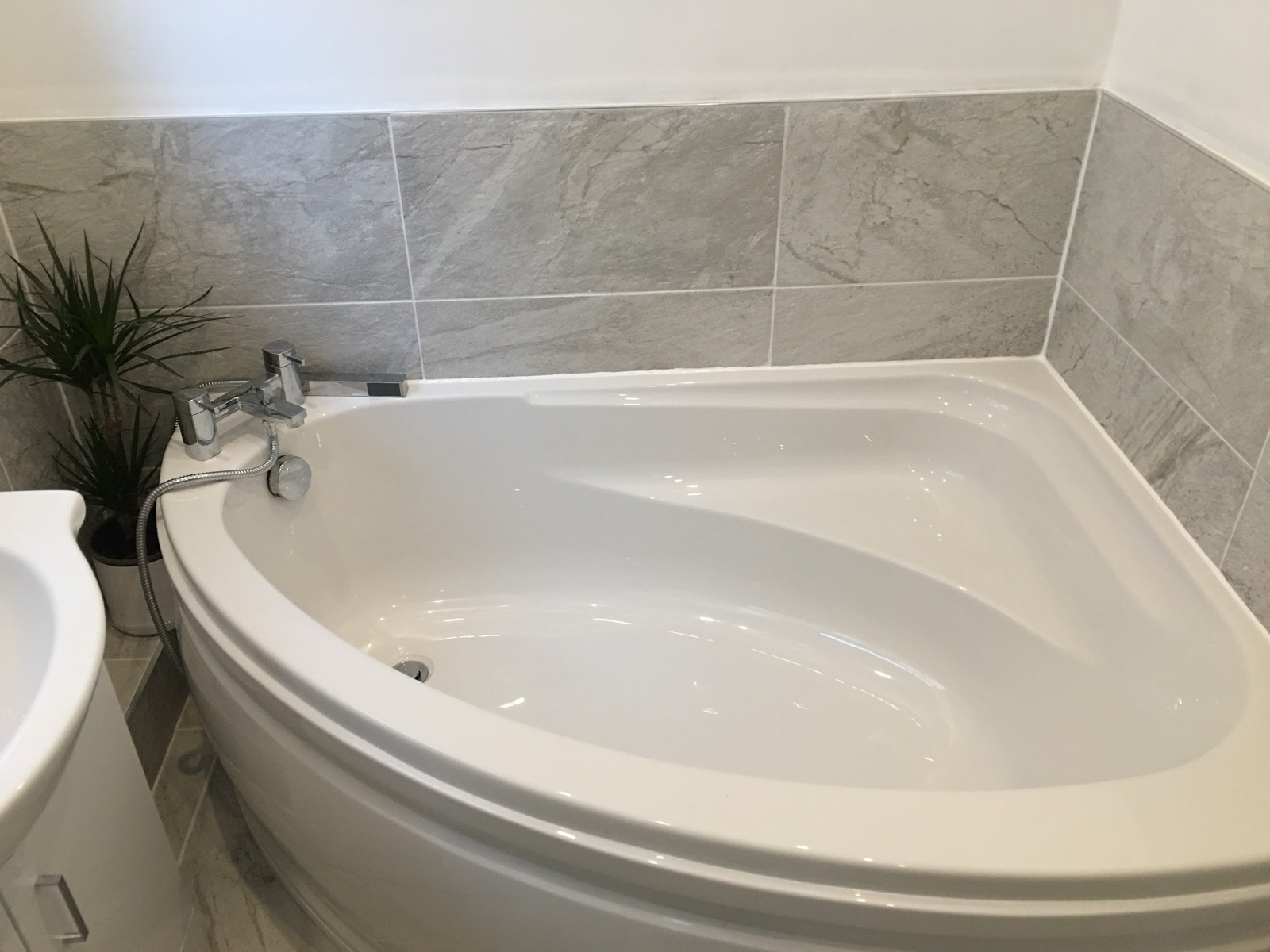
An offset corner bath fitted against a tiled surround with a deck-mounted mixer — sealed and supported so the panel does not flex when it is filled.
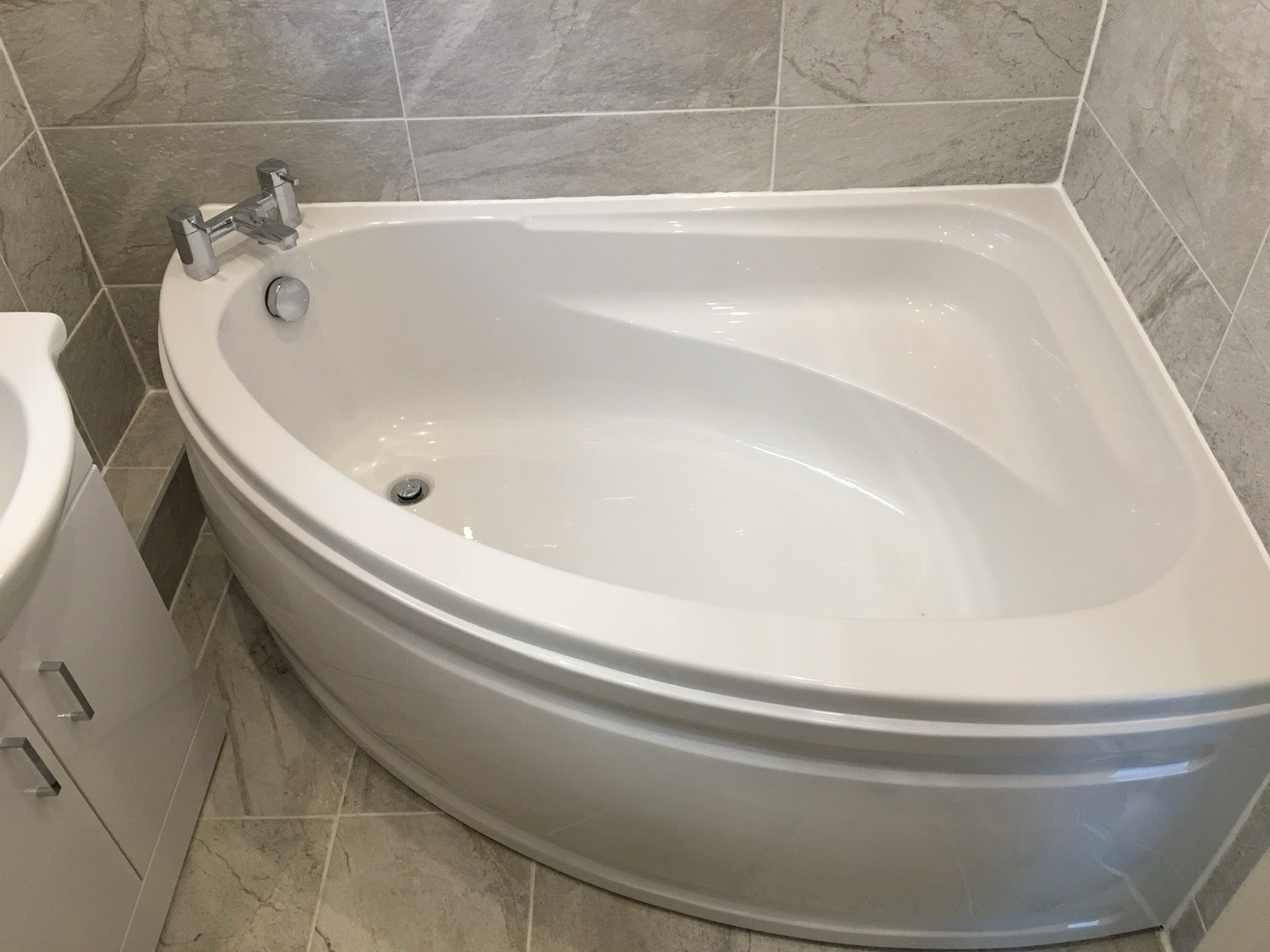
The same style of bath in a second bathroom, with the basin and pedestal in and the first-fix pipework already buried.
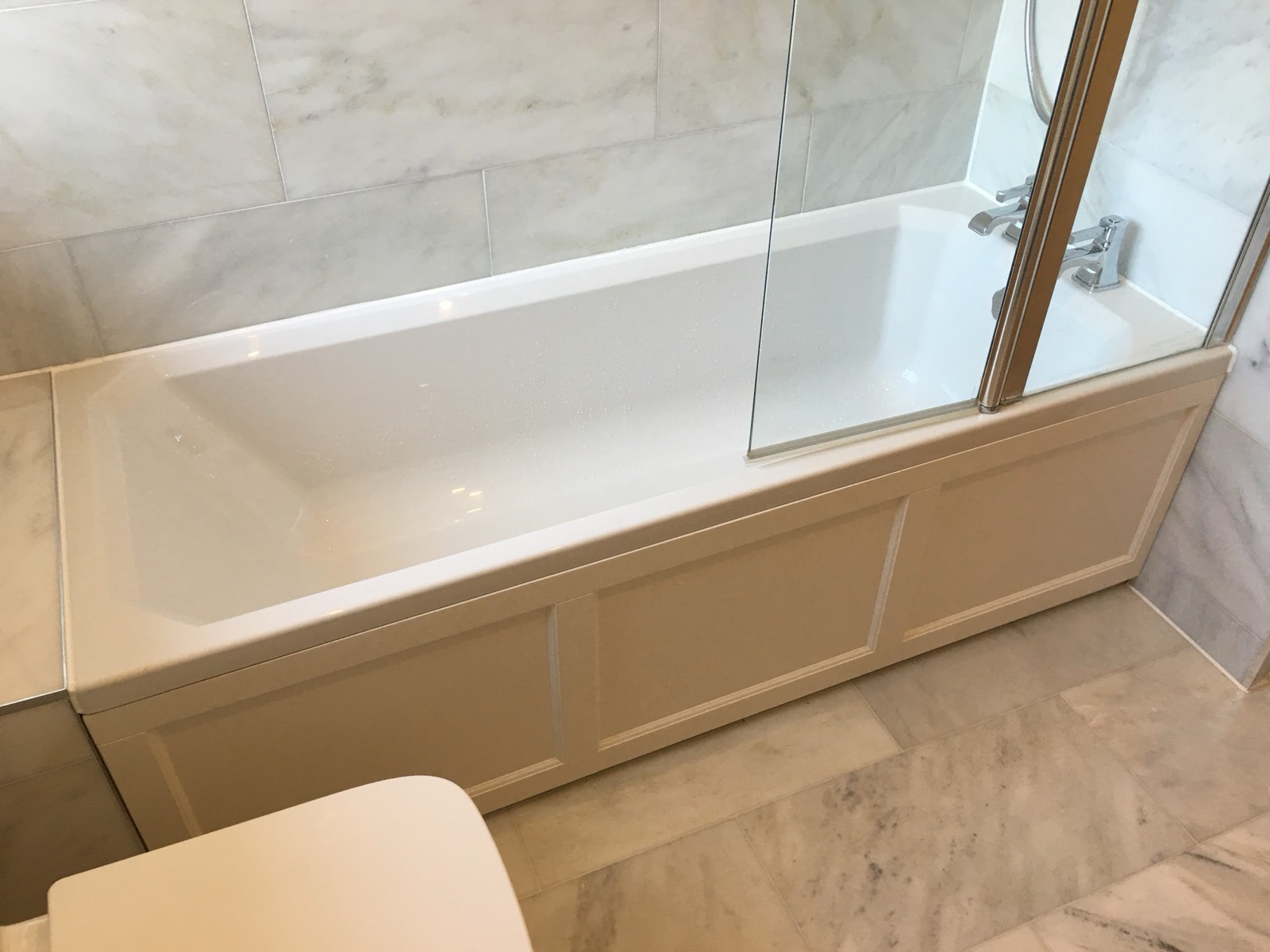
A panelled bath with a hinged glass screen on marble tiling, fitted as part of a full bathroom refit.
How the common jobs go
Four jobs, explained rather than testified to.
There are no customer quotes on this page because JET Heating's Google profile does not carry any yet. These are descriptions of the work — what the problem usually turns out to be, and what gets done about it.
The oil boiler nobody has touched in three years
The situation — Off the mains gas network, the boiler is usually the most expensive thing in the house to run and the least likely to have been serviced. Oil is unforgiving about it: a clogged nozzle, dirty filters and a combustion head set by guesswork will burn measurably more oil every hour the boiler runs, and the first symptom is usually a smell or a lock-out rather than a bill you can see.
What gets done — An oil service at £149 plus VAT is a strip and a set-up, not a glance: nozzle replaced, filters changed, electrodes checked and gapped, baffles and combustion chamber cleaned, then combustion tested and the head set to the figures the manufacturer actually specifies. Carried out under OFTEC registration, which is a separate qualification from gas — plenty of local engineers hold one but not the other.
A system that loses pressure overnight
The situation — The gauge reads one and a half bar when you top it up and half a bar three days later. Most people top it up again and carry on, which hides the fault and slowly fills the system with fresh, oxygenated water — the fastest way to corrode radiators from the inside and produce the sludge that makes them cold at the bottom.
What gets done — Pressure has to be going somewhere: a weeping joint under a floor, a failed expansion vessel, a leaking pressure relief valve discharging quietly outside, or a pinhole in a radiator. The order of checks matters, and so does the honesty of the answer — a re-charged expansion vessel is an hour's work, while a buried leak is a different conversation. Breakdown and repair work is charged at £99 plus VAT per hour, minimum one hour, with parts agreed first.
A new shower that will not run properly
The situation — The most common disappointment in a bathroom refit is a shower that was chosen from a brochure rather than matched to the house. A powerful thermostatic mixer fed by a gravity system with two metres of head will never perform, and no amount of adjusting the valve will change that.
What gets done — The fix starts on the hot water side, not at the shower: what the incoming main actually delivers, whether the cylinder is vented or unvented, and what pressure and flow are available at the outlet. As a registered Aqualisa installer, James specifies from what the house has — and where the hot water system is genuinely the limit, he says so before you buy the shower rather than afterwards.
A certificate needed before Friday's tenancy starts
The situation — A Landlord Gas Safety Record is a twelve-month legal requirement for rented property in England, and it has to be in the tenant's hands at the start of the tenancy. It is also the job most likely to be remembered late, which is how landlords end up paying whatever the first firm to answer the phone asks for.
What gets done — A certificate covering two appliances is £99 plus VAT, with additional appliances at £25 plus VAT each — published, so it is not a negotiation. Every appliance is checked and, if something fails, you get told what it needs and what it costs before anything is stripped down. One engineer, so the recheck afterwards is the same person who wrote the record.
Want your job to look like one of these?
Ring James on 07391 701168 or send a photo of what you are working with on WhatsApp. For services, certificates and surveys the price is already published.